Richmond Appliance Noise Problems: Quick Diagnosis Guide
Hearing strange sounds from your appliances lately and wondering if it’s time to panic? Don’t worry – we’ll walk you through the most common appliance noises Richmond homeowners face and help you figure out when to call in the pros versus when you can handle it yourself.
Look, I get it – there’s nothing quite like being jolted awake at 2 AM by your dishwasher making sounds like a cement mixer, or having your dryer suddenly start thumping like it’s hosting its own drum circle. As someone who’s lived through more appliance drama than I care to admit (RIP to my college mini-fridge that sounded like a dying whale), I’ve learned that appliance noises are basically your home’s way of speaking to you. The trick is learning to decode what they’re actually saying.
Whether you’re chilling in your cozy Fan District apartment or managing a busy household in Short Pump, appliance noise problems are just part of the homeowner experience. But here’s the thing – some sounds are totally normal, while others are your appliance’s cry for help.
Key Outtakes:
- Kitchen appliances are typically the noisiest in your home, with sound levels ranging from 40 to 90 decibels
- Living room heating devices produce much quieter operation between 35 and 50 decibels
- Sudden changes in appliance noise patterns often signal the need for professional repair services
- Early diagnosis of unusual sounds can prevent costly repairs and complete appliance failure
- Regular maintenance and proper installation help minimize disruptive appliance noises
Understanding Normal vs. Problem Appliance Sounds
Here’s the deal – every appliance has its own personality when it comes to sound. Your refrigerator’s gentle hum is totally different from your washing machine’s enthusiastic spin cycle, and that’s completely normal. Research shows that household appliances produce varying noise levels, with kitchen appliances being the loudest performers in your home’s daily symphony.
The kitchen really is where all the acoustic action happens, and honestly, it makes sense when you think about it. You’ve got motors spinning, water rushing, heating elements firing up – it’s like a mini factory tucked between your countertops. Most kitchen appliances operate between 40 and 90 decibels, which puts them somewhere between a library whisper and city traffic noise.
But here’s where things get interesting – your living room appliances are way more chill. Heating devices typically hang out in the 35 to 50 decibel range, which is basically background noise level. It’s when these normal sound patterns suddenly change that you need to pay attention.
Common Richmond Kitchen Appliance Noise Issues
Now that we’ve covered the basics, let’s dive into the specific sounds that might be driving you absolutely bonkers. Kitchen appliances are notorious for developing personality disorders as they age, and each type has its own tell-tale signs when something’s going wrong.
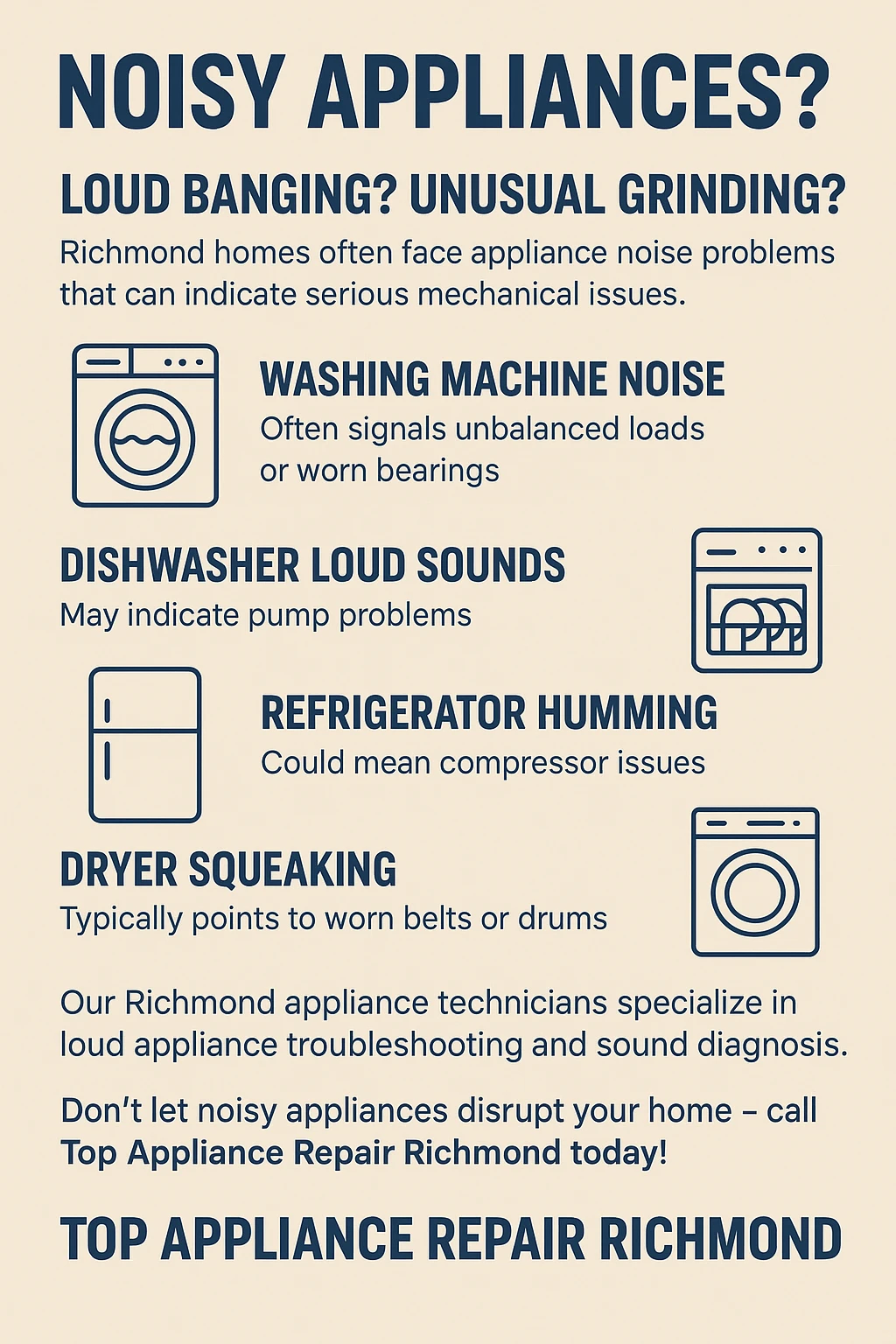
Your refrigerator is probably the most talkative appliance in your kitchen. A gentle hum is totally normal – that’s just your compressor doing its job. But if you’re hearing clicking sounds that seem to go on forever, or buzzing that’s gotten noticeably louder, your compressor might be struggling. I learned this the hard way when my fridge started clicking like a metronome set to double-time, and I ignored it until it completely gave up during a particularly hot Richmond summer.
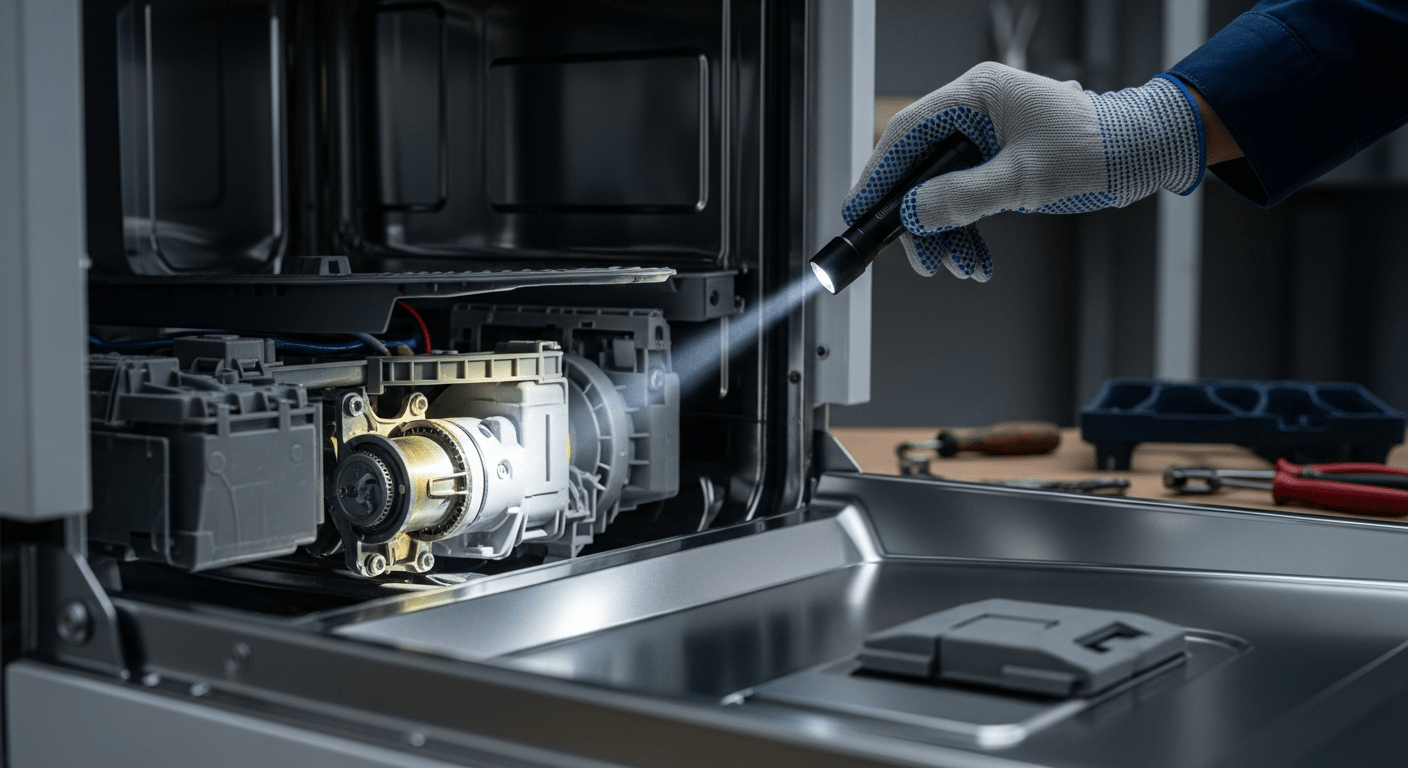
Dishwashers can be real drama queens when they start acting up. That normal swishing sound of water moving around? Totally fine. But grinding noises are a whole different story – they usually mean something’s stuck in the pump or motor, or worse, the motor itself is failing. It’s like when you accidentally drop a fork down the garbage disposal, except this time it’s trapped inside your dishwasher doing damage.
Don’t even get me started on washing machines and their tendency to throw literal tantrums. A balanced load should run pretty smoothly, but when you hear loud banging during the spin cycle, it’s usually because the machine is unbalanced or the shock absorbers are worn out. Think of it like trying to drive a car with a flat tire – everything just feels wrong and sounds worse.
Diagnosing Heating and Cooling System Sounds
Moving beyond the kitchen chaos, let’s talk about the sounds coming from your HVAC system and other climate-control appliances. These tend to be much quieter operators, which actually makes unusual noises more noticeable when they do crop up.
Your heating system should generally operate in that peaceful 35 to 50 decibel range we talked about earlier. When you start hearing rattling, squealing, or grinding sounds, it’s usually a sign that components are wearing out or something’s come loose. I remember helping a friend in Forest Hill troubleshoot her heat pump that started making this awful squealing noise every time it kicked on – turned out to be a worn belt that was about to snap.
Air conditioning units can develop their own set of vocal quirks, especially during Richmond’s humid summers when they’re working overtime. A gentle whoosh of air is what you want to hear. But if your AC starts making grinding, clicking, or rattling sounds, it could indicate anything from loose components to compressor issues. The key is paying attention to when these sounds happen – is it constant, or only when the unit cycles on and off?
Window units and portable air conditioners are particularly prone to noise issues because they’re self-contained systems working in smaller spaces. They naturally operate at higher decibel levels than central systems, but sudden increases in noise or new types of sounds usually mean trouble’s brewing.
Laundry Room Noise Troubleshooting
After dealing with kitchen and climate control sounds, the laundry room presents its own unique set of acoustic challenges. These appliances tend to be larger, more powerful, and frankly, they don’t try to hide the fact that they’re working hard.
Dryers are probably the most straightforward to diagnose when something’s wrong. Normal operation includes some tumbling sounds and gentle whooshing of air. But when you hear loud thumping, it’s often because the drum rollers are wearing out or the belt is starting to slip. I once had a dryer that developed this rhythmic thumping sound – every rotation, thump, thump, thump. Ignored it for about a week before realizing it was basically announcing its impending breakdown.
Washing machines are a bit trickier because they go through different cycles with different sound profiles. The fill cycle should be relatively quiet water sounds, the wash cycle involves some agitation noise, and the spin cycle gets progressively louder as it speeds up. Problems arise when you hear grinding during any cycle, excessive vibration that makes the whole machine shake, or loud banging that sounds like the machine might actually take off.
Front-loading washers have their own special quirks. They’re generally quieter than top-loaders, but they can develop bearing issues that manifest as grinding or squealing sounds. Plus, if the door seal gets damaged, you might hear air whooshing or water sloshing in ways that just don’t sound right.

When Professional Help Is Needed
Knowing when to call in the professionals versus attempting a DIY fix can save you both money and frustration. While it’s tempting to try to tough it out or ignore the problem hoping it’ll resolve itself, some situations definitely require expert intervention.
The golden rule is this: if the noise represents a sudden change from normal operation, or if it’s accompanied by other symptoms like reduced performance, strange smells, or visible damage, it’s time to pick up the phone. Professional repair becomes especially critical when you’re dealing with electrical components, gas connections, or anything that could pose a safety risk if handled incorrectly.
Cost considerations play a huge role in repair decisions too. Simple fixes like tightening loose screws, replacing worn belts, or cleaning out debris might be DIY-friendly if you’re comfortable with basic tools. But complex issues involving motors, compressors, or electronic controls typically require specialized knowledge and tools that most homeowners don’t have lying around.
The age of your appliance also factors into the decision. If you’re dealing with a newer appliance still under warranty, attempting repairs yourself might void that coverage. On the flip side, if you’ve got an older appliance that’s been showing multiple signs of wear, it might make more financial sense to replace rather than invest in extensive repairs.
Frequently Asked Questions
Why do my appliances seem noisier at night?
Appliances don’t actually get louder at night, but ambient noise levels in your home drop significantly when everyone settles down for the evening. Without the competition from TV, conversations, and daytime activities, normal appliance sounds become much more noticeable. It’s the same reason you might suddenly notice your refrigerator’s hum when you’re trying to fall asleep – it was always there, you just couldn’t hear it over everything else.
Are louder appliances necessarily broken appliances?
Not necessarily, but sudden changes in volume definitely warrant attention. Some appliances naturally operate at higher decibel levels due to their design and function – garbage disposals and blenders are never going to be whisper-quiet. However, if an appliance that used to run quietly suddenly becomes much louder, or if you notice new types of sounds you’ve never heard before, that’s usually a sign that something has changed and needs investigation.
How can I reduce normal appliance noise in my home?
There are several strategies for managing normal appliance noise levels. Proper installation and leveling can eliminate a lot of unnecessary vibration and rattling sounds. Regular maintenance like cleaning filters, checking for loose components, and ensuring adequate clearance around appliances helps them operate more efficiently and quietly. For appliances that are naturally loud, consider running them during daytime hours when ambient noise levels are higher, or look into sound-dampening materials if noise is a significant concern in your living space.
Wrapping Up
Understanding your appliances’ normal sound patterns versus problematic noises can save you from both unnecessary worry and costly emergency repairs. Remember that kitchen appliances naturally operate at higher noise levels, while sudden changes in any appliance’s sound profile usually indicate something needs attention.
When you’re dealing with persistent or concerning appliance noises in the Richmond area, don’t let small problems turn into major headaches. At Top Appliance Repair Richmond, we specialize in diagnosing and resolving appliance issues quickly and efficiently, serving neighborhoods from the Fan District to Short Pump and everywhere in between – our experienced technicians can help restore peace and quiet to your home.