Richmond Appliance Age Calculator: When to Repair vs Replace
Ever stood in front of your broken dishwasher wondering if it’s time to say goodbye forever or give it one last chance? Join the thousands of Richmond homeowners wrestling with the ultimate kitchen dilemma – repair or replace – as we break down the real costs, smart strategies, and neighborhood-specific tips that’ll save you both money and sanity. Picture this: you’re hosting Sunday brunch for your friends in your gorgeous Short Pump home when suddenly your washing machine decides to throw an absolute tantrum. Water everywhere, strange grinding noises that sound like a freight train, and you’re standing there in your favorite slippers wondering if this is the end of an era. As someone who’s lived through the appliance apocalypse more times than I care to admit, I totally get that sinking feeling when your trusty kitchen companion starts acting up. Living in Richmond means dealing with unique challenges that our appliances face daily – from the humidity that loves to mess with internal components to the hard water in areas like Glen Allen that slowly builds up scale and kills heating elements faster than you can say “James River.” Add in the fact that a new dishwasher can easily cost you a month’s worth of groceries, and suddenly that repair quote doesn’t look quite so scary.
Key Outtakes:
- Follow the 50% rule: if repair costs exceed half the price of replacement, consider buying new
- Richmond’s climate and water conditions accelerate appliance wear, making regular maintenance crucial
- Appliances under 8-10 years old are usually worth repairing, especially high-end models
- Environmental impact matters: repairing keeps millions of appliances out of landfills annually
- Local repair services often cost $200-500, while new appliances start around $800 plus installation
Understanding Richmond’s Unique Appliance Challenges
Let’s be real – Richmond isn’t just any city when it comes to appliance longevity. Our specific environmental conditions create headaches that homeowners in drier climates rarely face. The humidity levels that make our summers so delightfully sticky also promote moisture damage in places you’d never expect, like inside your dryer’s control panel or behind your refrigerator’s coils. Meanwhile, the water quality in different Richmond neighborhoods varies dramatically. If you’re living in areas like Mechanicsville or parts of Henrico County, you’re dealing with harder water that leaves mineral deposits everywhere. I learned this the hard way when my six-year-old dishwasher started leaving white spots on everything, and the repair technician showed me chunks of buildup that looked like concrete formations. The cost of living in Richmond adds another layer of complexity to repair versus replace decisions. When a basic refrigerator starts at $1,200 and delivery alone can run $100-150, suddenly spending $300 on repairs doesn’t seem unreasonable. Factor in our notorious traffic delays for delivery windows and the hassle of coordinating old appliance removal, and repair becomes even more attractive from a convenience standpoint. 
The Financial Reality Check
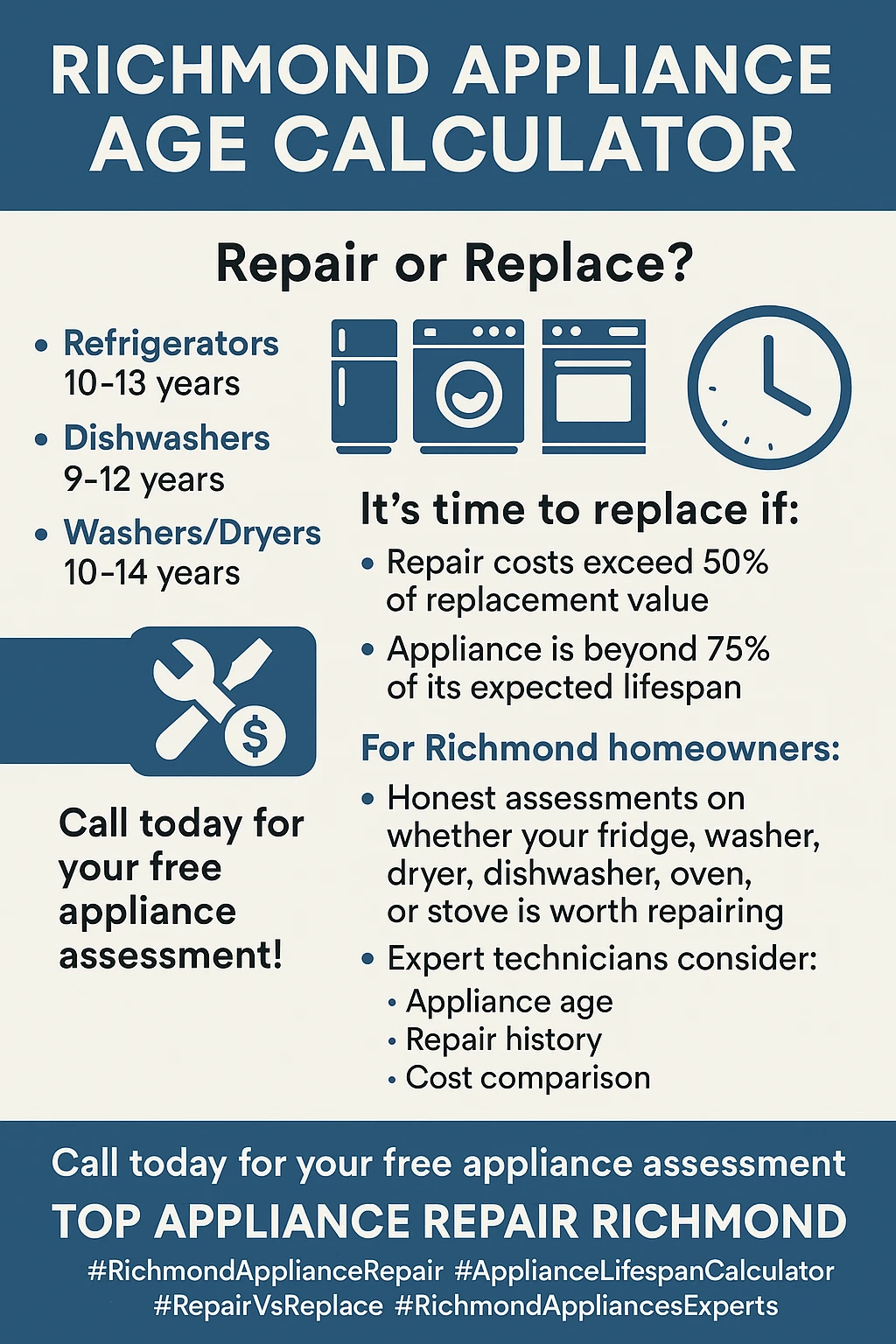
Understanding the true cost breakdown helps make smarter decisions about when repair makes financial sense versus throwing in the towel. The famous 50% rule provides a starting point, but Richmond homeowners need to consider additional factors that can tip the scales in either direction. This rule suggests that if repair costs exceed half the replacement value, you should probably replace the appliance. However, this guideline assumes you’re comparing apples to apples, which isn’t always the case. When calculating replacement costs, most people forget about the hidden expenses that add up quickly. Installation fees typically range from $100 to $400 depending on complexity, delivery charges add another $50 to $150, and if you need electrical updates to accommodate a newer model, costs can spiral into the thousands. Disposal fees often catch people off guard too. While some retailers offer free haul-away with purchase, others charge $75 to $150 for this service. These seemingly small fees add up and make repairs more attractive from a purely financial perspective. Energy efficiency deserves special consideration in Richmond’s expensive utility market – newer appliances often use 20-30% less energy than models from just five years ago, which can save $100-200 annually for refrigerators running 24/7.
Local Repair Costs in Richmond
Richmond-area appliance repair services typically charge diagnostic fees ranging from $89 to $150, usually waived if you proceed with repairs. Common repair costs break down predictably across appliance types. Refrigerator repairs usually fall between $200 and $450, dishwasher repairs commonly range from $180 to $350, and dryer repairs often cost $150 to $320. Parts availability significantly impacts both cost and feasibility – older appliances may require special ordering that increases both expense and repair time. 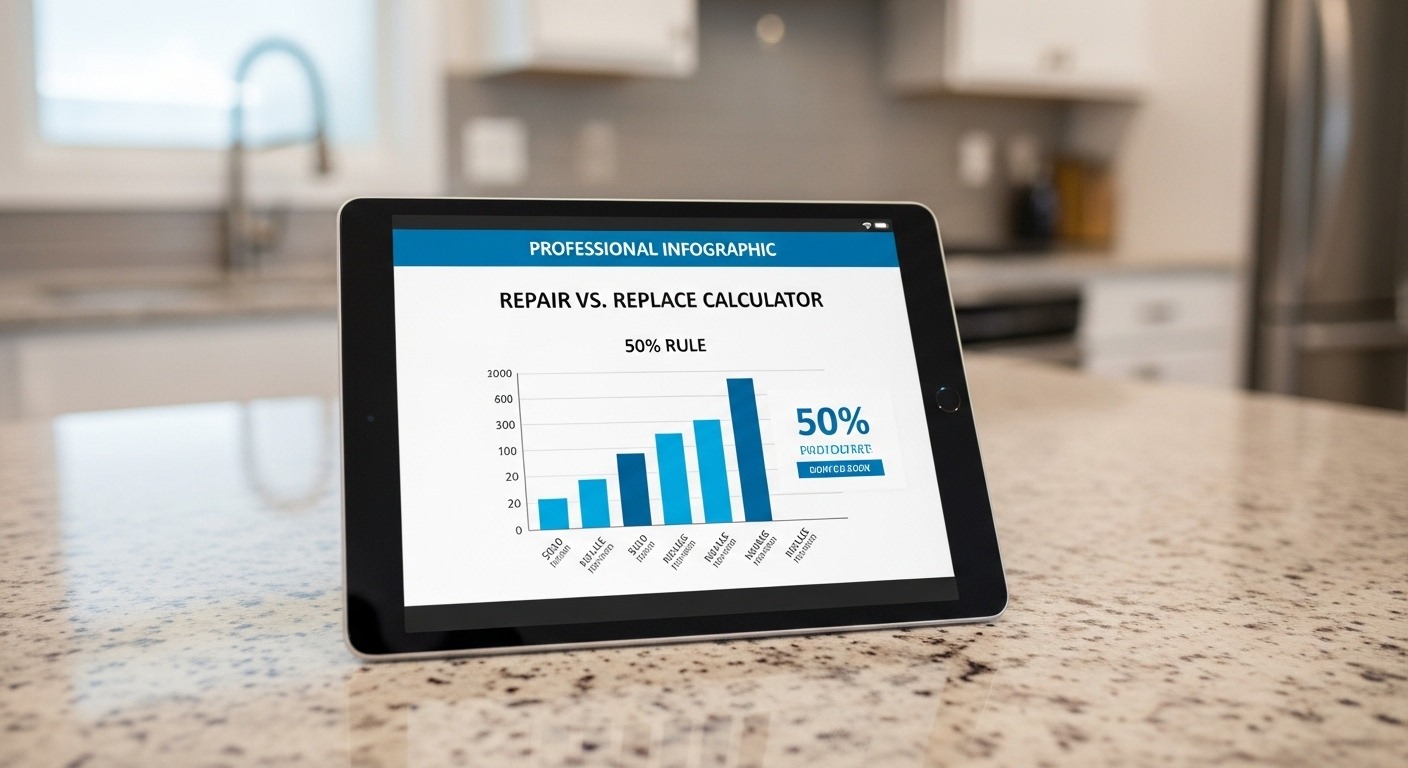
Age and Appliance Lifespan Considerations
Every appliance has an expected lifespan, and knowing where yours falls on that timeline helps inform repair decisions. Understanding these timeframes becomes particularly important in Richmond’s challenging environment, where appliances often wear out faster than national averages suggest due to our climate conditions. Refrigerators typically last 10 to 18 years, with higher-end models often reaching the upper end of this range. However, Richmond’s humidity can stress cooling systems, potentially shortening this lifespan by 2-3 years. If your fridge is under ten years old and needs repairs costing less than $400, it’s usually worth fixing. Between ten and fifteen years, consider the repair history and overall condition before committing to major repairs. Washing machines and dryers generally survive 10 to 13 years with proper maintenance. Front-loading washers, popular in Richmond condos and townhomes due to space constraints, often develop door seal and bearing issues around the eight-year mark. Dishwashers typically last 9 to 16 years, but Richmond’s hard water can significantly reduce this lifespan through scale buildup that damages heating elements and pumps.
When Age Trumps Everything
Once appliances cross certain age thresholds, repair becomes increasingly questionable regardless of current repair costs. A 15-year-old appliance faces multiple potential failure points that can create a cascade of repair needs. Even if today’s repair costs seem reasonable, you’re likely looking at additional repairs within the next year or two. Parts availability becomes a serious concern for appliances over 12 years old. Manufacturers typically support parts availability for 8-10 years after discontinuing a model, making older unit repairs expensive and time-consuming. Consider also that older appliances lack modern safety features and efficiency standards that provide both safety and cost benefits over time. 
Environmental Impact and Sustainability
The environmental implications of repair versus replacement deserve serious consideration, especially for environmentally conscious Richmond residents. Our region prides itself on sustainability initiatives, and appliance decisions represent a meaningful way to support these values while managing household budgets effectively. Manufacturing new appliances requires significant energy and raw materials, while disposal creates waste that persists for decades. Every year, Americans send approximately 5.1 million tons of appliances to landfills, representing enormous waste of valuable resources including steel, aluminum, and copper. Richmond’s growing commitment to environmental responsibility makes this waste particularly problematic. Repairing appliances directly reduces demand for new manufacturing while extending the useful life of existing materials and energy investments. A successful repair can add 3-5 years to an appliance’s lifespan, representing significant resource conservation. The sustainability calculation becomes more complex when considering energy efficiency improvements in newer appliances – a 12-year-old refrigerator might use 35% more energy than a current model, creating ongoing environmental costs through increased electricity consumption.
Richmond-Specific Repair Considerations
Living in Richmond creates unique opportunities and challenges for appliance repairs that homeowners in other cities rarely face. Our city’s compact neighborhoods mean repair services can often provide same-day service, while our environmental consciousness supports a robust network of repair specialists who prioritize fixing over replacing.
Many Richmond homes, particularly in areas like the Fan and Museum District, feature older housing stock with unique spatial constraints that make appliance replacement complicated and expensive. Narrow hallways, steep stairs, and limited access points make moving refrigerators or washers challenging, often requiring professional movers at $150-300 beyond the appliance cost.
Richmond’s repair service network has adapted to serve our unique housing stock and environmental values. Many local companies specialize in historic home service calls and carry common parts for frequent repairs. This specialization means faster, more cost-effective repairs compared to cities where repair services cover larger territories with more varied housing types.
Climate-Specific Maintenance
Richmond’s climate demands specific maintenance approaches that can significantly extend appliance life and reduce repair needs. Understanding these requirements helps homeowners get maximum value from both repairs and existing appliances. Humidity control becomes particularly important for appliances with electronic components that can fail prematurely in moist conditions. Regular cleaning takes on added importance in our climate. Refrigerator coils exposed to humid air collect dust and debris faster, reducing efficiency and increasing energy costs. Dryer vents become particularly problematic, as our damp climate creates conditions where lint buildup can become moldy and create fire hazards, requiring monthly rather than seasonal maintenance.
When Replacement Makes Sense
Despite the environmental and often financial advantages of repair, certain situations clearly favor replacement over attempting fixes. Recognizing these scenarios helps avoid throwing good money after bad while ensuring reliable appliance performance when you need it most. Safety concerns should always trigger replacement regardless of repair costs or appliance age. Gas appliances showing signs of combustion problems, electrical appliances with frequent breaker trips, or any appliance producing burning smells require immediate replacement. Richmond’s dense neighborhoods make appliance-related fires particularly dangerous due to proximity concerns. Multiple recent repairs often indicate systemic problems that will continue generating service calls. If you’ve called for repairs three or more times in the past year, the appliance is likely approaching complete failure. Even if individual repairs seem cost-effective, cumulative expense and inconvenience usually exceed replacement costs when factoring in lost time and potential emergency service charges.
Upgrade Opportunities
Sometimes replacement makes sense because newer appliances offer significantly improved functionality that justifies the additional cost. Modern dishwashers clean better while using less water and energy, particularly important given Richmond’s utility costs and water conservation initiatives. Smart appliance features provide real value for busy households – remote monitoring capabilities let you check appliance status while stuck in traffic on I-64, while maintenance alerts can prevent minor issues from becoming major repairs. Space efficiency improvements in newer appliances particularly benefit Richmond’s varied housing stock. Counter-depth refrigerators provide full capacity while fitting better in galley kitchens common in Fan District homes, while compact stackable washer-dryer units can fit in closets, freeing valuable floor space in smaller apartments and condos throughout the region.
Making the Decision
The final decision between repair and replacement requires balancing multiple factors specific to your situation and priorities. While general guidelines provide useful frameworks, individual circumstances often create exceptions that favor one choice over another. Start by getting accurate repair estimates from reputable local services rather than relying on initial diagnostic guesses. Experienced technicians can often identify multiple issues during inspections, providing comprehensive repair costs that avoid surprises later. Consider your timeline and tolerance for inconvenience when making decisions – if you’re hosting events or have specific deadlines, appliance reliability becomes more critical than cost optimization.
Evaluate your long-term housing plans when weighing repair versus replacement decisions. If you’re planning to move within two years, expensive repairs might not provide adequate value recovery. Conversely, if you’re settled in places like Midlothian or Glen Allen long-term, investing in quality repairs or efficient replacements makes more financial sense over extended periods.
Professional Consultation Value
Honest professional advice from experienced repair technicians provides invaluable perspective for difficult decisions. Quality repair services want to build long-term customer relationships rather than maximize individual service calls, meaning they’ll often recommend replacement when repairs don’t make sense. Get multiple opinions for expensive repair decisions, particularly when dealing with appliances approaching 10-12 years old. Different technicians may identify varying solutions with significantly different costs and reliability expectations.
Frequently Asked Questions
What is the 50% rule for appliance repairs?
The 50% rule suggests that if repair costs exceed half the price of a comparable new appliance, replacement usually makes more financial sense than repair. However, this guideline requires adjustments for Richmond’s specific conditions and costs. For example, if a washing machine repair costs $350 and a comparable new unit costs $800, the repair falls within the 50% guideline and likely makes sense. You also need to factor in additional replacement costs like delivery, installation, and disposal fees, which can add $200-400 to the total replacement expense.
The rule works best for appliances in the middle of their expected lifespan. Very new appliances under warranty should almost always be repaired regardless of cost, while very old appliances approaching 12-15 years may warrant replacement even for relatively inexpensive repairs. Richmond’s high delivery costs and installation challenges often make repairs attractive even when they slightly exceed the 50% threshold.
How does Richmond’s climate affect appliance lifespan?
Richmond’s climate significantly impacts appliance longevity through several mechanisms that homeowners often overlook. The high humidity levels accelerate corrosion of metal components, particularly in appliances with frequent temperature changes like refrigerators and dryers. Hard water conditions common in Henrico County and western Richmond suburbs create scale buildup that damages heating elements, pumps, and internal components.
The combination of humidity and moderate temperatures creates ideal conditions for mold and mildew growth in appliances with poor ventilation. Washing machines, particularly front-loading models, develop seal problems and odor issues more quickly than in drier climates. Regular maintenance becomes more critical to prevent these climate-related problems from shortening appliance life significantly.
When should I definitely replace instead of repair?
Several situations clearly indicate replacement over repair regardless of immediate costs. Safety issues should always trigger immediate replacement, including gas appliances with combustion problems, electrical units causing frequent breaker trips, or any appliance producing burning odors. Richmond’s dense neighborhoods make appliance-related hazards particularly concerning due to proximity to other homes.
Appliances requiring multiple repairs within six months typically indicate systemic failures that will continue generating service calls. Even if individual repairs seem cost-effective, cumulative expense and inconvenience usually exceed replacement costs. Age-related replacement becomes necessary when appliances exceed 12-15 years and require major component replacement, as parts availability diminishes significantly and older units lack modern safety features.
Wrapping Up
Making smart decisions about appliance repair versus replacement requires balancing multiple factors specific to Richmond living. Our unique climate, housing constraints, and cost considerations create conditions where repair often makes more sense than in other regions. However, safety concerns, appliance age, and repair frequency can quickly tip the scales toward replacement regardless of immediate cost considerations. When you’re facing tough appliance decisions in Richmond, Top Appliance Repair Richmond understands the local challenges and can provide honest assessments to help you make the best choice for your home and budget – because sometimes the smartest investment is knowing when to repair and when to move on.