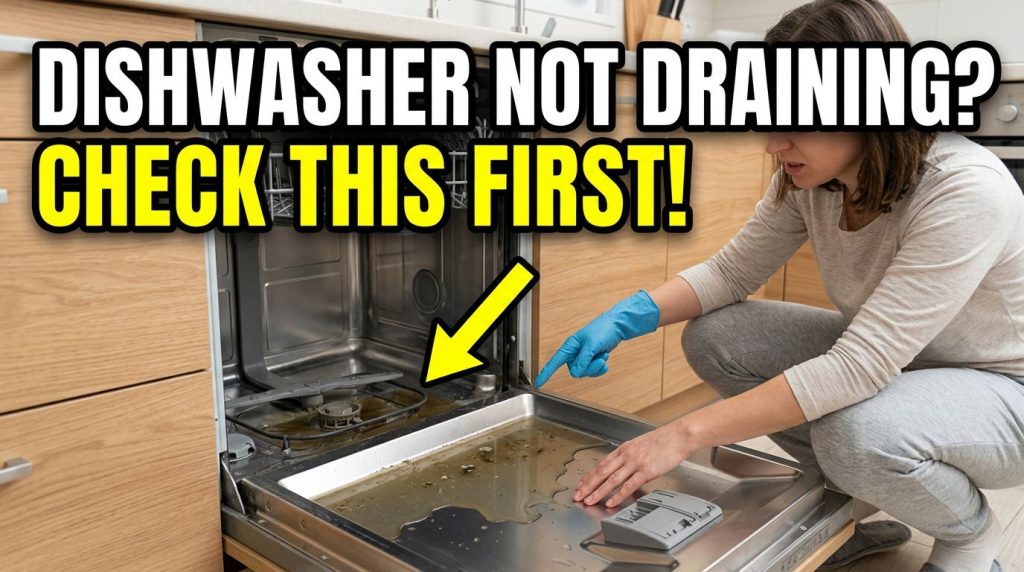
You open the dishwasher after a full cycle and find a pool of murky water sitting at the bottom. Nobody wants to come home to that, especially when you’re not sure if it’s a quick fix or an expensive repair call. This guide walks you through every realistic cause of a dishwasher not draining, what to check yourself, and when it actually makes sense to pick up the phone. Dishwasher drainage problems are more common than most people realize, and the good news is that the majority of them come down to something straightforward. A clogged filter, a kinked hose, or a backed-up garbage disposal. At Top Appliance Repair Richmond, we field calls about standing water in dishwashers regularly, and more often than not, the fix doesn’t require a technician at all. Richmond’s older housing stock plays a role here, too. Many homes in the area have plumbing that’s seen a few decades of use, and that history shows up in how dishwashers drain. The connection between the dishwasher and the sink drain can accumulate grease and food debris faster in older systems, especially if the drain hose hasn’t been inspected in a while.
Key takeaways
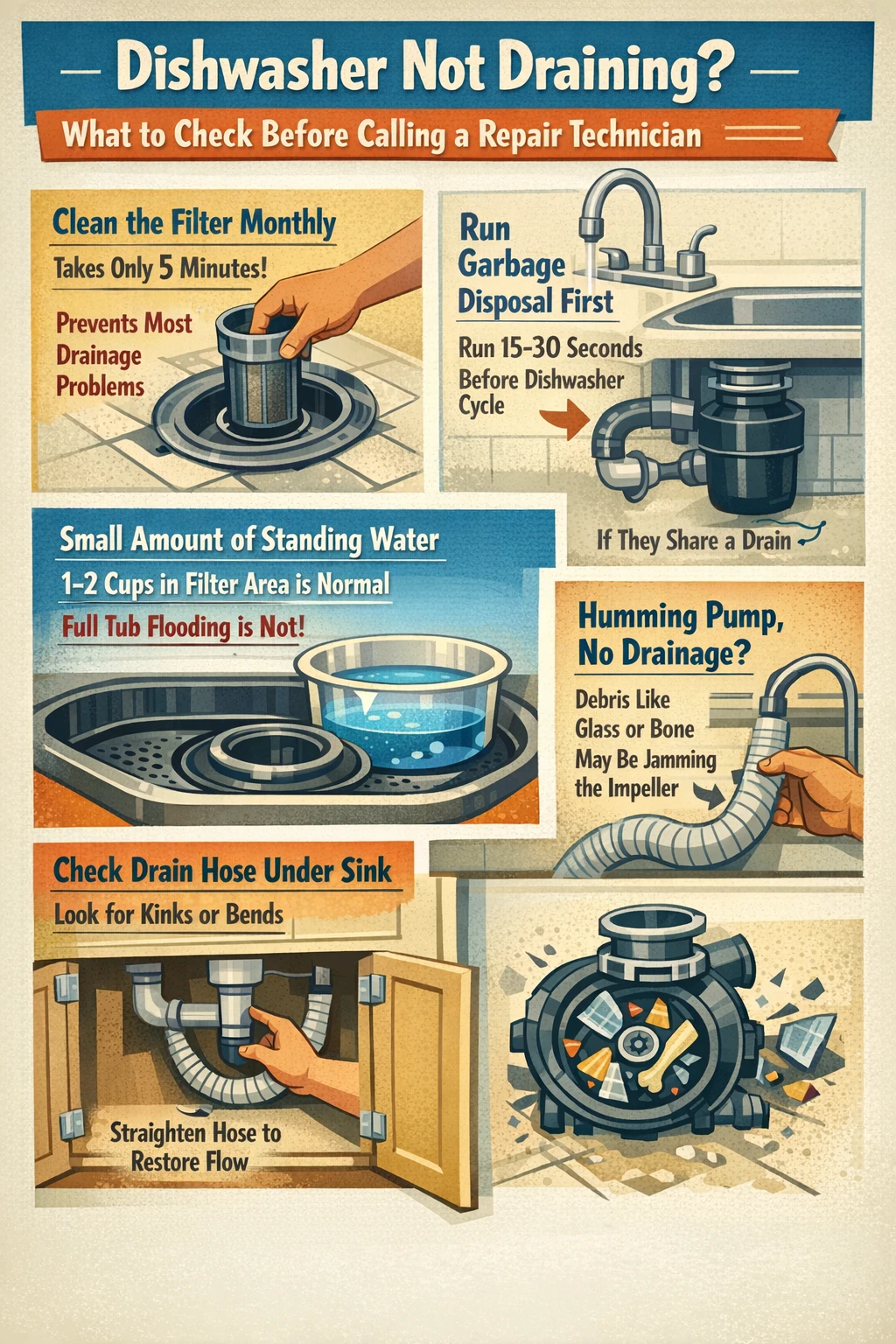
- The most common cause of dishwasher drainage problems is a clogged filter. Cleaning it monthly takes about five minutes and prevents most issues.
- Standing water of one to two cups in the filter area is actually normal on many models; a full bottom-of-the-tub flood is not.
- Always run your garbage disposal for 15 to 30 seconds before starting a dishwasher cycle if they share a drain connection.
- A kinked or improperly looped drain hose is one of the most commonly missed causes, and it costs nothing to fix if you catch it early.
- If the drain pump hums but nothing drains, a piece of debris. Broken glass, a bone fragment, a small plastic chip. May be jamming the impeller.
- When multiple drains in your home are slow at the same time, the problem is almost certainly in your main drain line, not the dishwasher itself.
How a dishwasher drain system actually works
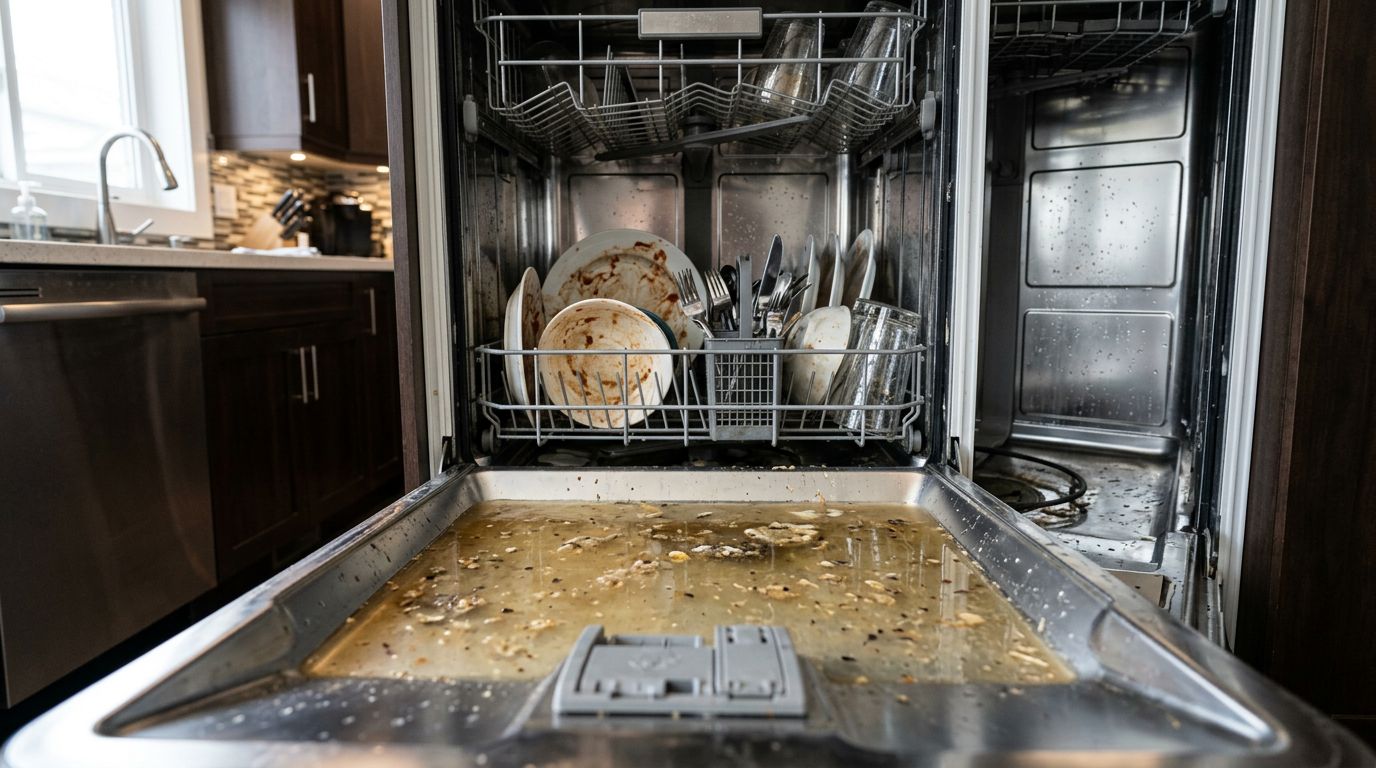 Before you start pulling things apart, it helps to understand what you’re dealing with. When a wash cycle finishes, the drain pump forces dirty water out through a corrugated drain hose. That hose connects to either your sink drain or your garbage disposal, sometimes through a small device on the countertop called an air gap. If any part of that path gets blocked or fails, water stays in the tub. There are really only a handful of components involved: the filter at the bottom of the tub, the drain pump, the drain hose, the garbage disposal connection, and the air gap (if your home has one). Most drainage failures happen at one of these five points. Start from the simplest and work toward the most complicated. That approach saves time and usually saves money. One thing worth knowing upfront: some water in the bottom of the dishwasher after a cycle is completely normal. Many manufacturers design their machines to retain a small amount in the filter area to keep the seals from drying out. Check your owner’s manual if you’re unsure. An inch or more of standing water covering the bottom of the tub after a completed cycle. That’s the problem we’re talking about here.
Start here: the filter
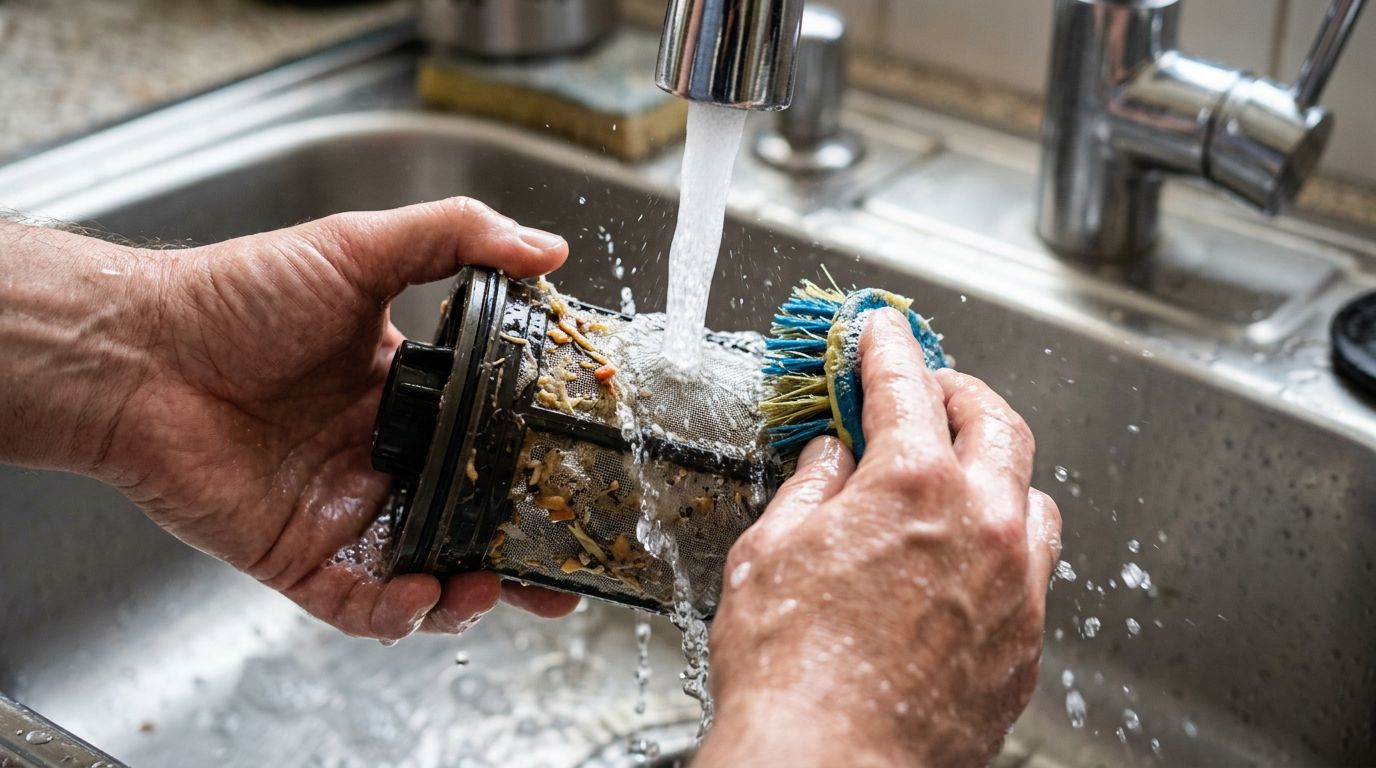 Honestly, this is one of those jobs that looks scarier than it is. The filter is the first thing to check because it’s the most common culprit, and cleaning it takes less time than reading this article. Pull out the bottom rack and look at the floor of the dishwasher. The filter assembly sits near the base of the lower spray arm or in a back corner, depending on your model. Most filters twist counterclockwise to unlock, then lift straight out. If yours is different, a quick look at the owner’s manual or a search for your model number will tell you exactly how it comes free. What you’ll find if it’s clogged: a buildup of food particles, grease, wet paper from container labels, and general gunk that’s accumulated over time. Rinse the filter under hot running water and scrub it gently with an old toothbrush. Do not use a wire brush or anything abrasive. You can damage the fine mesh and create a bigger problem. While the filter is out, shine a flashlight into the area below it and look for any visible debris in the pump area. Fish out anything you can reach. Reinstall the filter, run a short cycle, and see if that solves it. A surprising number of times, it does. Bosch recommends cleaning their dishwasher filters at least once a month. You can find their maintenance guidance on the Bosch home appliance support page. Other brands have similar recommendations buried in the owner’s manual that most people never read.
The garbage disposal connection
If you cleaned the filter and still have standing water in the dishwasher, the garbage disposal is the next logical stop. Most built-in dishwashers drain through the disposal, which means a clogged or full disposal will back water right up into the dishwasher. Run the disposal for 15 to 30 seconds with cold water before you start your dishwasher. It sounds almost too simple, but this one habit prevents a lot of calls. We see this situation often in homes around the Westover Hills area, where original kitchen plumbing setups are still in place and the dishwasher and disposal share a tight drain configuration. There’s also a less obvious issue that catches new homeowners off guard: if your garbage disposal was recently replaced or a new one was just installed, the drain plug inside the disposal connection may not have been knocked out. Every new disposal ships with a plastic plug blocking the dishwasher inlet. The installer is supposed to remove it. Sometimes they forget. If your dishwasher suddenly stopped draining right after a new disposal went in, that’s almost certainly the reason. Do not put your hands inside the disposal to check. Turn off the power to the unit, then look in with a flashlight.
The drain hose and the high-loop rule
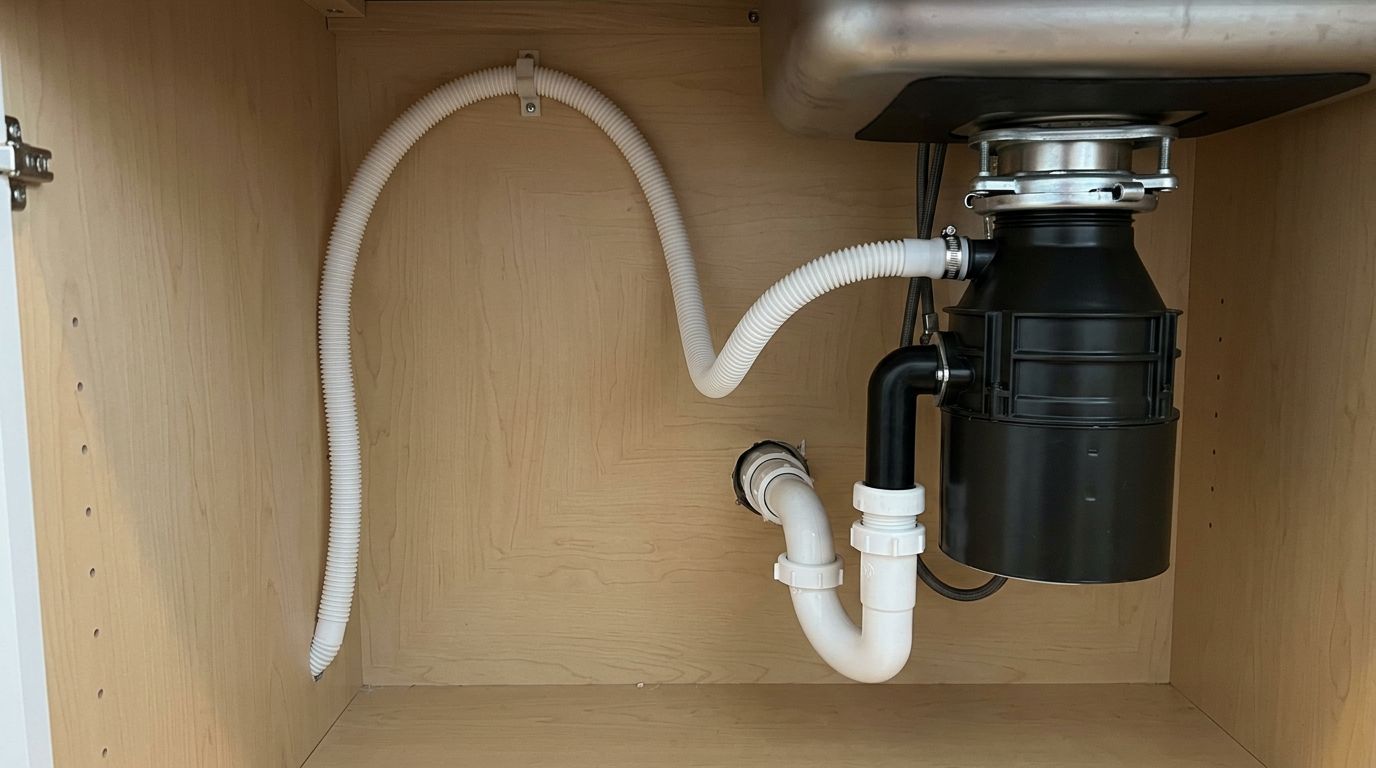 The drain hose runs from the dishwasher’s pump to the disposal or sink drain connection under the cabinet. Two things go wrong here: kinks and clogs. A kink can happen during installation if the hose got bent around a sharp corner, or later if someone pushed a cleaning product or pot against it while storing things under the sink. Pull everything out from under the cabinet and trace the hose from start to finish. If you see a pinch or bend, gently straighten it. That alone can restore full drainage. Clogs inside the hose are trickier. Grease and food debris build up over time, especially in older hoses. You can disconnect the hose from the disposal connection, hold the end over a bucket, and run a drain cycle to see if water flows out. If nothing comes through, the hose is blocked. A bottle brush pushed through both ends usually clears it. If the hose is cracked, stiff, or badly gunked up, replacing it with a new corrugated drain hose is inexpensive and the right call. There’s also the high-loop issue. If your dishwasher drain hose runs straight down to the disposal without looping up first, dirty water can siphon back into the machine. The hose should be looped up to the underside of the counter. Secured at its highest point. Before coming back down to the drain connection. Some installations use an air gap instead, which serves the same purpose. If neither is in place, your dishwasher may drain but then immediately refill with contaminated water.
Checking the air gap
Not every home has an air gap, but if yours does, you’ll recognize it as a small cylindrical fitting on the countertop or the back edge of the sink. Usually chrome, often right next to the faucet. It prevents dirty water from flowing back into the dishwasher. Air gaps get clogged with debris over time. The fix is easy: twist or pop off the decorative cap, lift out the inner cap, and look inside. You’ll often find a buildup of food particles, grease, or in one memorable case described by a homeowner, a perfectly cylindrical piece of chicken bone that fit the opening like it was made for it. Clean the inside with a small brush and warm water. Reassemble and test. If water is spraying out of the air gap while the dishwasher runs, that means there’s a blockage between the air gap and the disposal. Clear the disposal, check the hose segment connecting the two, and the problem usually resolves.
When the drain pump itself is the problem
If you’ve checked everything above and the dishwasher still won’t drain, the drain pump becomes the likely suspect. This is where things get a little more involved, but it’s still worth checking before calling anyone. Press the cancel or drain button on your machine and listen carefully. You should hear a buzzing or whirring sound as the pump activates. If you hear nothing at all, the pump motor may have failed. If you hear a hum but no water moves, something is likely jamming the impeller. The spinning part that pushes water out. Small objects cause this more often than you’d think. A fragment of broken glass, a small bone, a piece of plastic from a container lid. Any of these can slip past the filter and lodge in the impeller, stopping it cold. One community member described spending the better part of a year troubleshooting drainage issues before discovering a single rib bone stuck in the drain hose. Another found a triangle of broken glass had jammed their pump and was getting a high-end machine for nearly nothing because of it. Accessing the pump typically means pulling the dishwasher out from under the counter and working from underneath. Many people are comfortable doing this with a good YouTube tutorial specific to their model. If you’re not, that’s a reasonable point to bring in a professional. On many common models, the drain pump itself is a $40 to $80 part and not difficult to swap out once you have access. The U.S. Department of Energy’s dishwasher resource page has useful background on how modern dishwasher systems are designed, which can help you make sense of how these components fit together.
One more thing: check your sink drain first
Sometimes the dishwasher isn’t the problem at all. If your kitchen sink is also draining slowly, or if other drains in the house are sluggish, the issue is likely a clog in your main drain line. Tree roots, grease buildup, and aging pipes are common in established neighborhoods. We hear about this fairly often from homeowners in the Forest Hill area, where mature trees and older sewer lines sometimes combine into a real headache. A dishwasher connects to the same drain system as your sink. If that shared line is obstructed, water has nowhere to go and will back up into both. Running a dishwasher when the main drain is partially blocked risks overflow. In that situation, the dishwasher isn’t broken. Your plumbing is, and that needs a plumber, not an appliance technician.
Frequently asked questions
These are the questions we hear most often when homeowners are dealing with dishwasher drainage problems. Some have quick answers; a few are more involved.
Is it normal to have some water left in the bottom of my dishwasher?
Yes, a small amount of water in the filter area after a completed cycle is normal and intentional. Manufacturers design this in to prevent the seals in that area from drying out and cracking. The amount varies by model, but generally anything less than two cups sitting in the sump area is not a cause for concern. Check your owner’s manual for your specific model’s guidance. A full bottom of the tub covered in standing water after a completed cycle is not normal and points to a drainage issue.
Can I run my dishwasher if it has standing water in it?
You can try running another cycle. But only if the standing water isn’t too deep and you’re prepared to deal with a potential overflow. A better approach is to remove as much water as you can first using a cup or turkey baster, then run a short cycle or press the drain button to see if the machine can clear itself. If it can’t, running a full cycle risks forcing more water into an already-blocked system, which can lead to leaks.
Why did my dishwasher suddenly stop draining when it was fine before?
Sudden drainage failures. Where the machine was working perfectly and then stopped. Usually point to one of three things. Something blocked the drain (a piece of food, glass, or debris made it through the filter and jammed the pump). The garbage disposal got clogged or a new disposal was installed without removing the knockout plug. Or a power interruption stopped the cycle mid-drain and the machine never completed it. Try pressing cancel or reset first, then work through the filter and disposal checks before assuming something is broken.
How do I get the standing water out before I can troubleshoot?
A wet-dry shop vac is the fastest option. If you don’t have one, use a cup to scoop out as much as you can, then soak up the rest with old towels. Lay the towels around the base of the dishwasher too, because things will drip when you pull out the filter or start checking connections. Some people use a turkey baster for the last inch or so. It’s slow but it works.
How often should I clean my dishwasher filter?
Once a month is the standard recommendation for most brands, and it takes about five minutes once you’ve done it once. If you run your dishwasher daily or put heavily soiled dishes in without scraping them first, cleaning it every two weeks makes sense. Models with a fine mesh filter. Common in European brands like Bosch and Miele. Require more frequent attention than models with self-cleaning grinders.
What does it mean if my dishwasher makes a humming noise but doesn’t drain?
A hum during the drain cycle means the pump motor is receiving power and trying to run. But something is physically stopping it. Nine times out of ten, that’s a foreign object jammed in the impeller. Small pieces of broken glass and bone fragments are the usual suspects. Accessing the impeller requires pulling the machine out and disassembling the pump area from below. It’s doable for a confident DIYer with the right YouTube tutorial for their specific model, but it’s also a reasonable job to hand off to a technician.
Wrapping up
A dishwasher not draining is almost always one of a short list of fixable problems: a clogged filter, a blocked garbage disposal connection, a kinked drain hose, or debris in the pump. Start with the simplest check. The filter. And work your way through the system before assuming the worst. Most of the time, you won’t need to call anyone. That said, if you’ve gone through all of these steps and the machine still has standing water, or if the problem turned out to be a failed drain pump or a main drain line issue, that’s where a professional saves you time and prevents further damage. At Top Appliance Repair Richmond, we handle dishwasher repair richmond and all major appliance issues across Richmond and the surrounding area. Give us a call and we’ll help you figure out what’s actually going on and what it makes sense to do about it.