Dealing with water damage from appliances in your Richmond home? We’ll walk you through the most effective prevention strategies and repair techniques to protect your investment and keep your family safe from costly disasters. Nothing hits quite like that sinking feeling when you discover water pooling around your washing machine or notice mysterious dampness spreading from behind your refrigerator. As someone who’s helped countless Richmond homeowners navigate appliance water damage over the years, I can tell you that what starts as a small leak can quickly snowball into a major headache involving flooring replacement, wall repairs, and potentially serious mold issues. The good news is that most appliance water damage is completely preventable with the right knowledge and a proactive approach. Whether you’re a new homeowner in Glen Allen learning the ropes or a seasoned Chesterfield resident who wants to stay ahead of potential problems, understanding how to prevent and address appliance water damage is absolutely crucial for protecting your home and your wallet.
Key Outtakes:
- Most appliance water damage stems from worn hoses, loose connections, and poor maintenance practices that are easily preventable
- Quick response is critical – water damage can escalate from minor to major within hours, especially in humid Richmond weather
- Regular inspections of appliance connections, drainage systems, and surrounding areas can catch problems before they become disasters
- Professional assessment is often necessary to identify hidden moisture and prevent long-term structural damage or mold growth
- Insurance coverage varies significantly for appliance-related water damage, making prevention your best financial protection
Understanding Appliance Water Damage in Richmond Homes
Living in Richmond means dealing with our fair share of humidity and seasonal weather changes, which can actually make appliance water damage more problematic than in drier climates. When moisture gets trapped in walls or under flooring, our warm, humid summers create the perfect breeding ground for mold and mildew. I’ve seen too many beautiful homes in neighborhoods like Midlothian suffer extensive damage simply because a small dishwasher leak went unnoticed for weeks. The most common culprits are washing machines, dishwashers, refrigerators with ice makers, and water heaters, though any appliance that uses water can potentially cause problems. What makes this particularly floral is that most of these incidents are completely avoidable with basic maintenance and awareness. A $5 hose replacement can literally save you thousands in water damage repairs. Richmond’s older housing stock, especially in historic areas, can be particularly vulnerable because original plumbing and electrical systems weren’t designed for today’s high-efficiency appliances. When you combine aging infrastructure with modern appliances that use sophisticated water management systems, you’re setting up potential failure points that require extra vigilance.
Common Sources of Appliance Water Damage
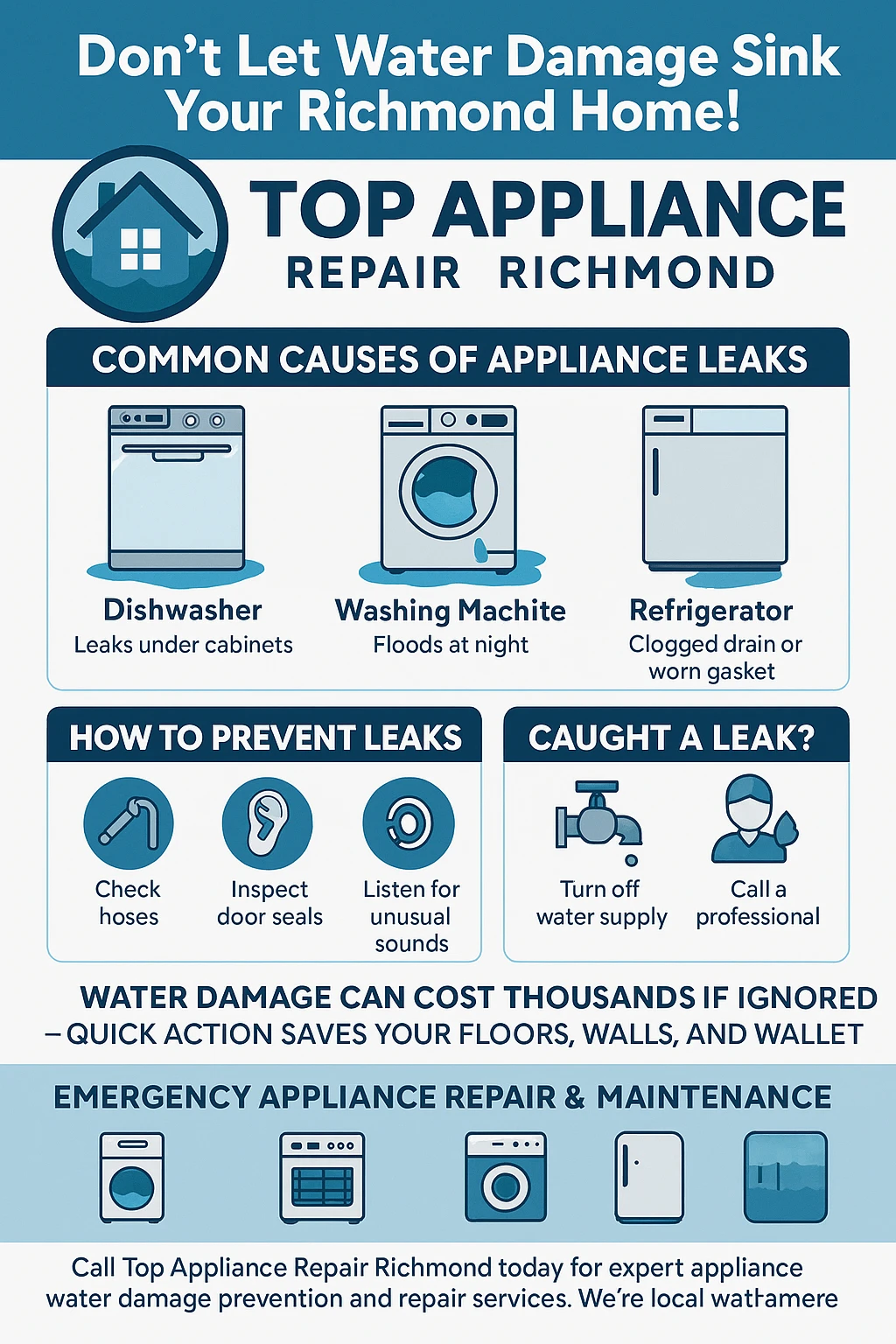
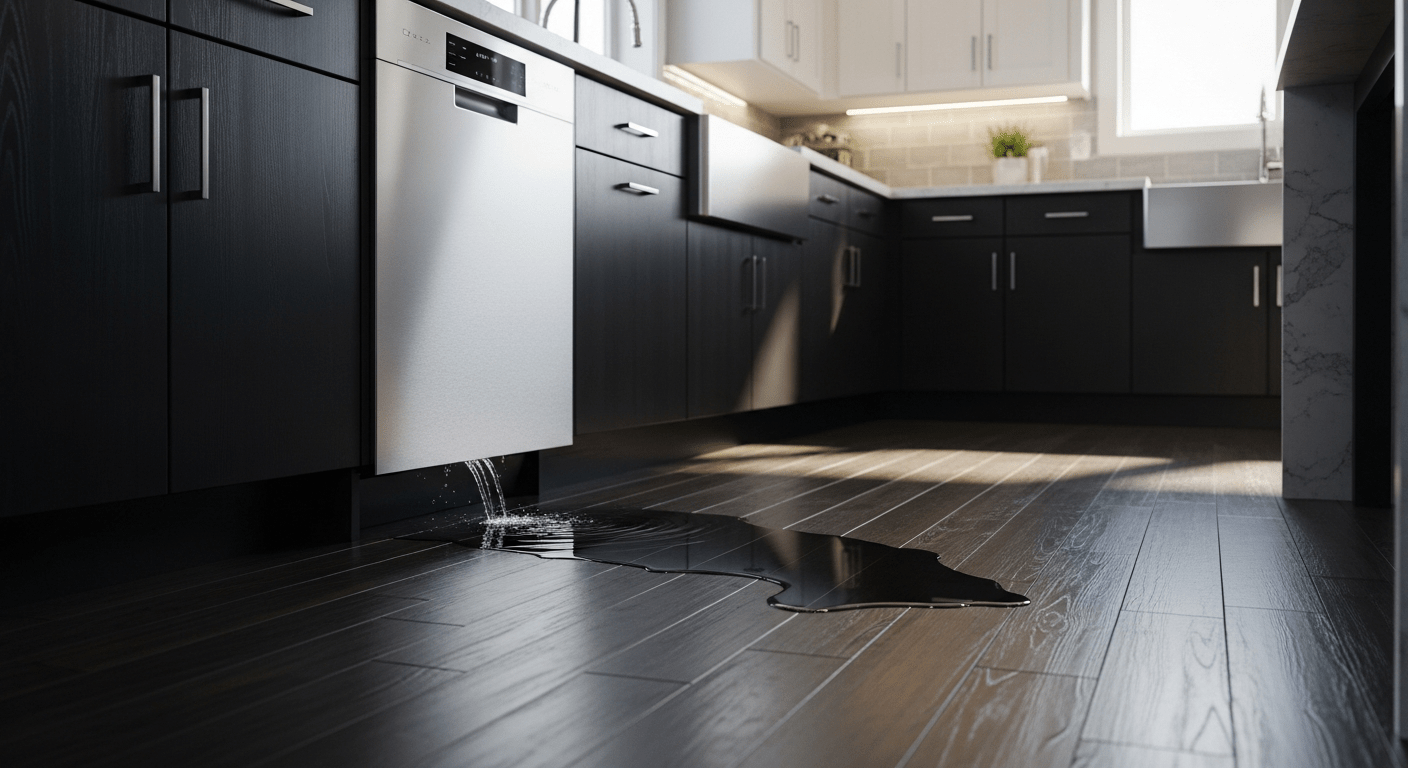
Before diving into prevention strategies, it’s essential to understand exactly where problems typically originate, because different appliances fail in predictable ways. By knowing these patterns, you can focus your inspection efforts on the most likely trouble spots and catch issues before they escalate. Washing machines top the list for water damage claims, and it’s easy to understand why when you consider they pump dozens of gallons through flexible hoses during each cycle. The rubber supply hoses that connect your washer to the wall outlets are under constant pressure and expand and contract with temperature changes, making them prone to bursting without warning. I always recommend replacing these every three to five years, regardless of their appearance, because the consequences of failure are so severe. 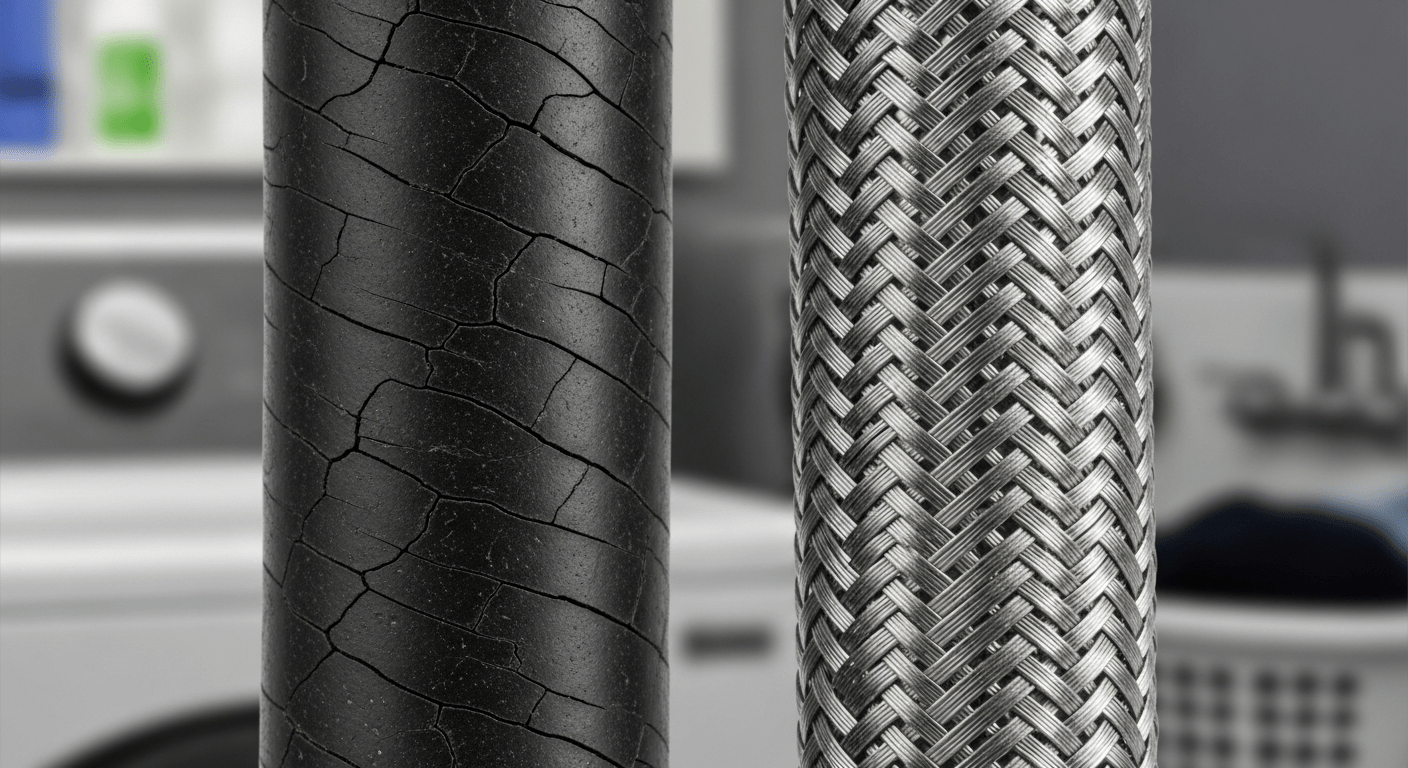 Dishwashers present a different set of challenges, primarily around door seals and drainage connections. The door gasket takes a beating from daily use and hot water, developing tiny cracks that allow water to seep onto kitchen floors. Even more problematic is when the drainage hose becomes kinked or clogged, causing water to back up and overflow during the drain cycle. Many homeowners don’t realize their dishwasher shares drainage with their garbage disposal, so problems with one can affect the other. Refrigerators with automatic ice makers and water dispensers have become increasingly sophisticated, but this complexity brings additional failure points. The plastic water lines that run behind and underneath these units can crack from temperature fluctuations or get damaged during cleaning. Water heaters, particularly older units, can develop slow leaks that go unnoticed until significant damage has occurred, especially when they’re located in basements or utility rooms that aren’t checked regularly.
Warning Signs to Watch For
Catching appliance water damage early often comes down to recognizing subtle warning signs before they become obvious disasters. Water stains on walls or flooring near appliances are obvious red flags, but there are more subtle indicators that savvy homeowners learn to recognize. Musty odors, especially in laundry rooms or kitchens, often indicate moisture problems that aren’t yet visible. Listen to your appliances during operation – unusual sounds like gurgling, dripping, or strain in motors can indicate drainage problems or loose connections. Pay attention to changes in how your appliances perform; if your dishwasher suddenly isn’t cleaning as well or your washing machine seems to be taking longer to fill, these could be signs of water pressure or drainage issues that might lead to bigger problems. Check the areas around your appliances regularly for signs of moisture, including condensation, rust on metal components, or warping in nearby wood surfaces. Professional water damage restoration services in Richmond often find that homeowners noticed these warning signs but didn’t realize their significance until it was too late.
Prevention Strategies That Actually Work
Moving from reactive to proactive thinking is crucial for preventing appliance water damage, and this shift in mindset can save you tremendous hassle and expense down the road. The most effective prevention strategies focus on regular maintenance, smart installation practices, and creating systems that alert you to problems early. Start with your washing machine, since it’s statistically the most likely to cause problems. Replace those rubber supply hoses with braided stainless steel versions, which cost a bit more upfront but are far more durable and reliable. These hoses resist bursting and can handle pressure fluctuations much better than standard rubber. Make sure your washing machine is properly leveled – an off-balance machine puts extra stress on hoses and connections, and can cause the unit to “walk” during spin cycles, potentially loosening connections. For dishwashers, focus on maintaining the door seals and ensuring proper drainage. Clean the door gaskets monthly with a mild bleach solution to prevent buildup that can cause cracking, and inspect them for signs of wear. Run your garbage disposal regularly to keep the shared drainage line clear, and consider having a professional check the dishwasher’s drainage connection annually. Refrigerator maintenance should include checking the water filter housing for leaks, inspecting the water lines visible behind the unit, and ensuring the ice maker isn’t overfilling or jamming. Many refrigerator water damage incidents occur when ice makers malfunction and continue running water even when the ice bin is full.
Smart Technology Solutions
Modern technology offers several tools that can provide early warning of water problems before they become disasters. Water leak detectors have become incredibly affordable and sophisticated, with models that can send alerts directly to your smartphone when they detect moisture. Place these near your washing machine, dishwasher, water heater, and refrigerator for comprehensive monitoring. 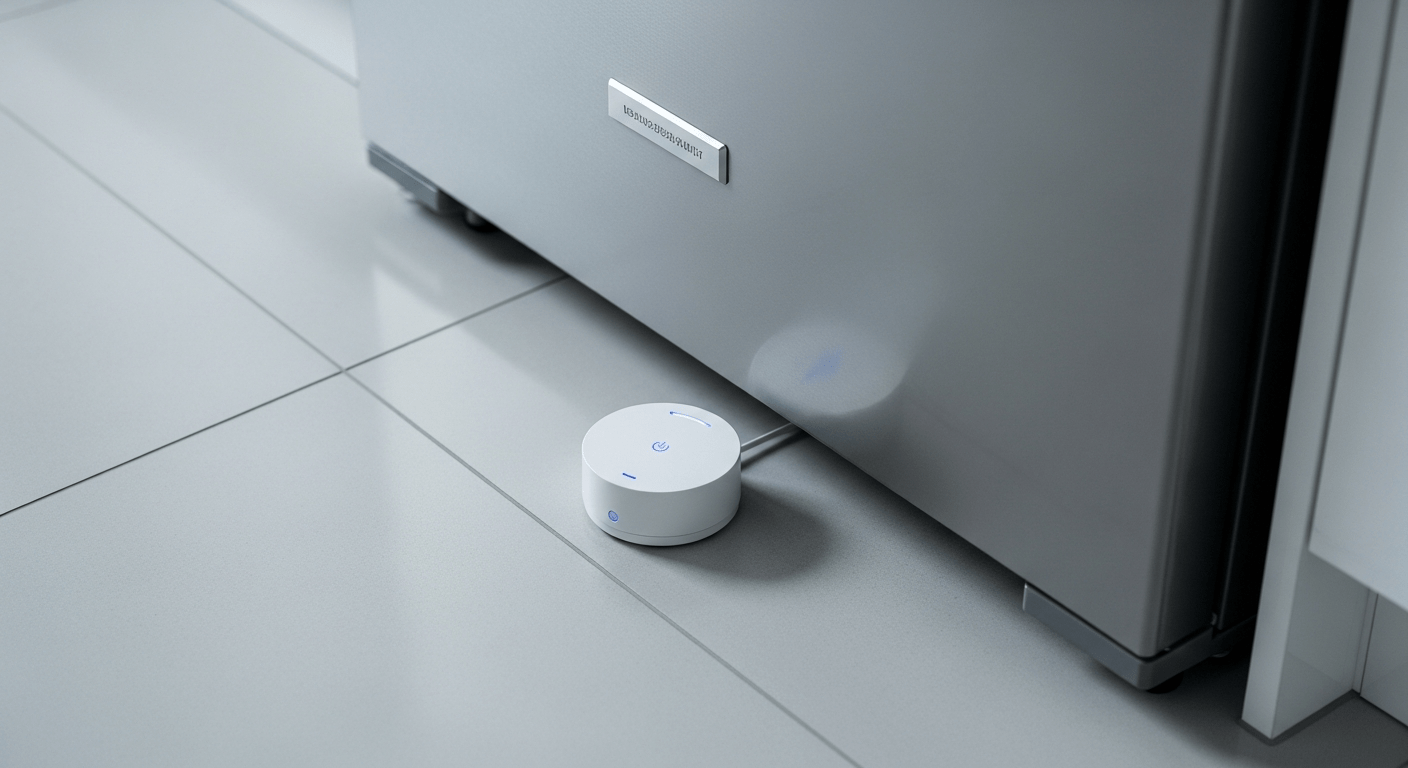 Smart water shutoff valves take protection a step further by automatically cutting off water supply when leaks are detected. These systems can be particularly valuable for vacation homes or if you travel frequently, providing peace of mind that a burst hose won’t flood your house while you’re away. Some newer appliances come with built-in leak detection and automatic shutoff features, which can justify the higher purchase price if you’re replacing older units. When shopping for new appliances, ask specifically about water damage prevention features – manufacturers are increasingly incorporating these technologies as standard equipment.
Immediate Response When Water Damage Occurs
Despite your best prevention efforts, appliance water damage can still occur, and your response in the first few hours makes a huge difference in the ultimate cost and extent of repairs. Having a clear action plan eliminates the panic and confusion that can lead to poor decisions during a stressful situation. Your first priority is always safety – turn off electricity to the affected area before stepping into standing water, and locate the water source to stop additional flooding. For washing machines, dishwashers, and refrigerators, this usually means turning off the appliance and shutting off water supply valves, which should be easily accessible behind or beside the unit. Document everything with photos before you start cleanup, both for insurance purposes and to help restoration professionals understand the full scope of damage. Remove standing water as quickly as possible using whatever means available – wet vacuums, mops, towels, or professional extraction equipment if you can get it quickly. The longer water sits, especially on wood flooring or in carpet, the more likely you’ll need complete replacement rather than restoration. Move furniture and belongings out of affected areas, and remove wet carpeting or rugs if possible. Begin air circulation immediately with fans and open windows if weather permits, but be aware that Richmond’s high humidity can sometimes make outdoor air more problematic than conditioned indoor air.
When to Call Professionals
While minor water incidents can often be handled with DIY efforts, there are clear situations where professional help is essential for proper restoration and to prevent long-term problems. Any water damage that affects structural elements like subfloors, wall framing, or electrical systems requires professional assessment and remediation. If water has been present for more than 24 hours, or if you detect any musty odors, professional mold assessment is crucial. Richmond’s climate makes mold growth particularly aggressive, and what looks like minor surface damage often conceals more extensive problems in wall cavities or under flooring. Professional water damage restoration services have specialized equipment for moisture detection, extraction, and drying that simply can’t be replicated with consumer tools. They also understand the insurance claims process and can provide documentation that supports your claim while ensuring repairs are done correctly to prevent future problems.
Frequently Asked Questions
How quickly does water damage become a serious problem in Richmond’s climate?
In Richmond’s humid climate, water damage can escalate much faster than in drier regions. Mold growth can begin within 24-48 hours of water exposure, especially during our warm summer months when humidity levels regularly exceed 70%. This means that what might be a minor cleanup in Arizona could become a major restoration project here if not addressed immediately. The combination of heat and moisture creates ideal conditions for both mold and bacteria growth, making quick response absolutely critical.
Does homeowners insurance typically cover appliance water damage?
Coverage varies significantly depending on the cause and your specific policy terms. Most policies cover “sudden and accidental” water damage, such as a burst washing machine hose, but may exclude damage from gradual leaks or lack of maintenance. Insurance companies often require proof that appliances were properly maintained, which is why keeping records of hose replacements and regular maintenance is important. Some policies exclude certain types of appliance damage entirely, so review your coverage annually and consider additional protection if needed.
What’s the difference between water damage restoration and simple cleanup?
Simple cleanup addresses visible water and surface damage, while professional restoration involves moisture detection in hidden areas, proper drying techniques, and treatment to prevent mold growth. Restoration professionals use specialized equipment like thermal imaging cameras to find moisture in wall cavities and industrial dehumidifiers to dry materials thoroughly. They also understand how different materials react to water exposure and can determine what can be saved versus what must be replaced to prevent future problems.
Wrapping Up
Protecting your Richmond home from appliance water damage doesn’t require expensive equipment or technical expertise – just consistent attention to maintenance and quick action when problems arise. The small investment in quality hoses, regular inspections, and modern leak detection technology pays massive dividends in preventing costly repairs and protecting your family’s health and safety. When water damage does occur despite your best efforts, Top Appliance Repair Richmond is here to help assess the situation and provide expert repair services for damaged appliances. Our experienced technicians understand how Richmond’s unique climate affects both appliance performance and water damage risks, and we’re committed to helping homeowners throughout Glen Allen, Chesterfield, and Midlothian protect their investments with reliable, professional appliance maintenance and repair services.